
Injector or Injection Pump? Two Different Parts That Get Mixed Up
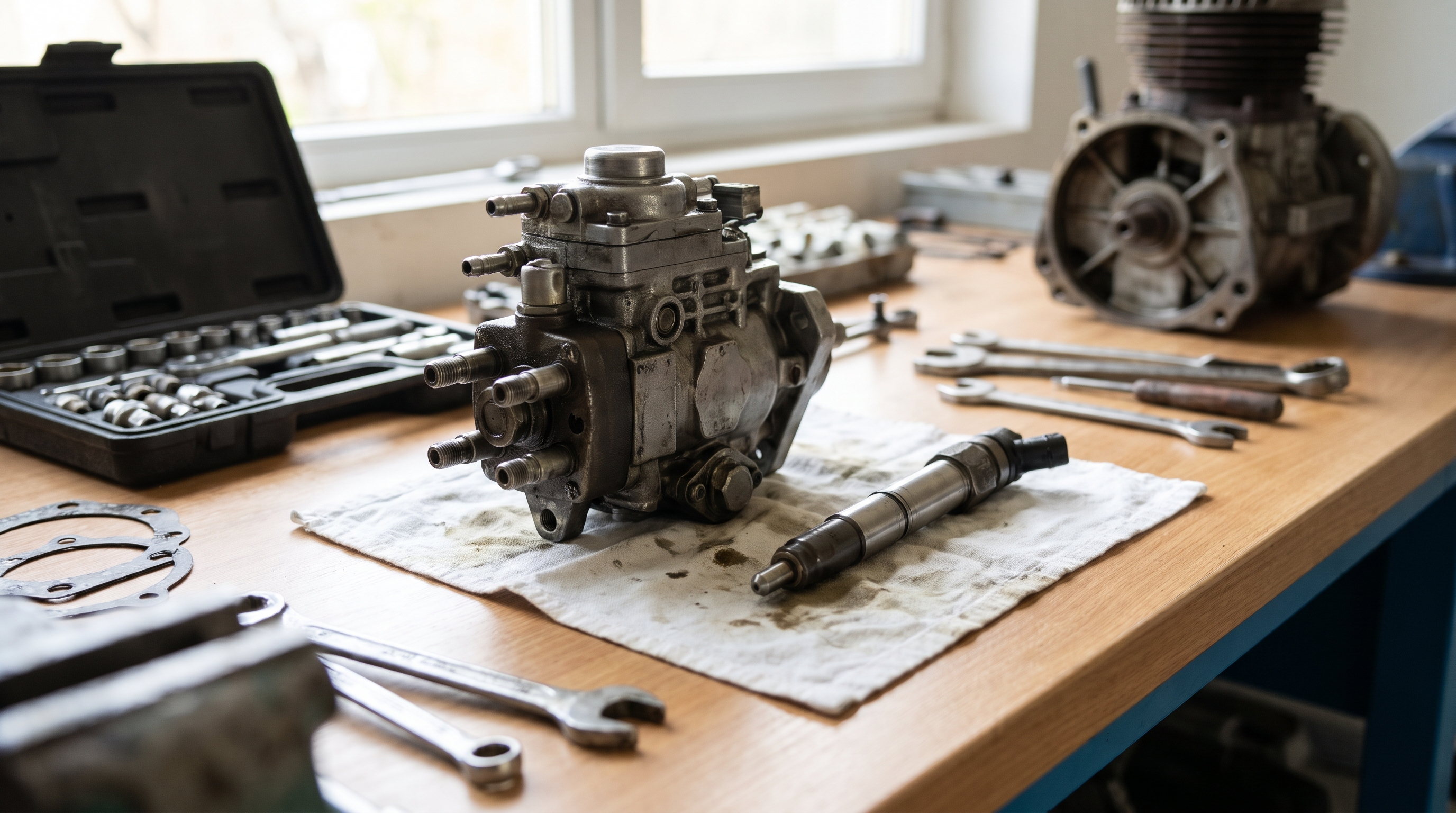
An injector and an injection pump are two different parts that do two different jobs, even though they get asked about together at the parts counter all the time. The injection pump pressurizes diesel fuel and sends it toward the cylinders on a schedule; the injector is the small nozzle at the cylinder that actually sprays that pressurized fuel into the combustion chamber. Ordering one when you need the other is one of the more common mix-ups we see.
Quick answer
The injection pump is the larger component, usually driven off the engine's timing gears, that builds fuel pressure and meters it out to each cylinder in firing order. The injector is a much smaller part mounted at the cylinder head that opens under that pressure and sprays fuel into the chamber. Some listings bundle a pump with its matching injectors as a single kit, but they remain two separate part types with two separate part numbers.
Why the injector or injection pump question comes up so often
Both parts live in the same fuel system and both get blamed for the same symptoms: hard starting, rough idle, smoke, or a loss of power. Because the terms sound close and both parts are diesel-specific, it's easy to ask for one when you mean the other, or to order a single injector thinking it will fix a problem that's actually upstream at the pump. Neither assumption is safe to build an order around.
What the injection pump does
The injection pump draws fuel from the tank side of the system, pressurizes it to the level diesel combustion requires, and distributes it to each cylinder at the correct point in the engine's cycle. On some engines one pump feeds all cylinders through a distributor head; on others each cylinder has its own pumping element. A pump that's out of time or losing internal pressure can affect every cylinder at once.
What the injector does
The injector sits at the cylinder and opens only when the fuel pressure reaching it crosses a set point, spraying fuel into the chamber in a fine pattern. A single injector problem tends to show up as a miss or rough running tied to one cylinder, rather than an across-the-board symptom affecting the whole engine.
Checks before you decide which part you need
- Note whether the symptom affects one cylinder or the whole engine. A single-cylinder miss points toward checking an injector first, while a symptom across every cylinder points toward the pump, though both are worth a look.
- Pull the number stamped on your old pump or injector before ordering anything. Numbers on these parts change by application and by serial-number break, even on engines that otherwise look identical.
- Check whether a listing covers the pump alone, the injectors alone, or a combined pump-and-injector set. Some kits bundle both, and ordering the wrong configuration leaves you with a part you didn't need.
- Check for fuel leaks at the pump or injector lines with the engine off. High-pressure diesel fuel can penetrate the skin and cause serious injury. Never use your hand to check for a fuel leak.
Comparing pump and injector part numbers
If your application uses a combined setup, compare the stamped number on this injection pump and injector set with the numbers on your old parts before ordering.
Compare the full stamped number against this injection pump and injector kit before you order.
Check the stamped number on this injection pump against the part you removed.
Compare your pump's stamped number against this injection pump repair kit before ordering.
Compare the stamped number on this injection pump with your old unit.
Pumps with similar part number prefixes can still differ by application. Check the full stamped number against this injection pump before buying.
Common questions
Is this the same as OEM number ___?
Only if the full stamped number matches, not just the prefix. Injection pumps in particular get superseded and revised within the same family, so a close-looking number by itself isn't a guarantee of an exact match.
Are these two part numbers interchangeable?
Sometimes, but not as a rule. Verify each part number individually against your old part rather than assuming one injection pump or injector covers every version of an engine.
My old part looks different — will this still fit?
A visual difference is a reason to check further, not a reason to rule a part in or out on sight. Compare the stamped number, not just the shape or finish, since housings can be revised while the internal spec stays the same, or the other way around.
Is this for the injector or the injection pump?
Read the listing title and description carefully. Injector and injection pump describe two different parts, and a listing for one is not interchangeable with a listing for the other unless it's specifically sold as a combined kit.
What to confirm before ordering
Before placing an order for either part, confirm the complete engine model, serial number, and original part number stamped on the part you're replacing, then compare that number against the listing rather than the general description. If you're not sure whether your engine uses a single combined pump-and-injector kit or separate parts, that's also worth checking against your old components before you buy, since ordering the wrong configuration is one of the more common reasons these parts come back.